How Long Do Balloon Garlands Last? Detailed Guide
A garland-specific lifespan guide — air-filled garland longevity indoors vs outdoors, what affects duration, timing installation, and professional vs DIY differences.
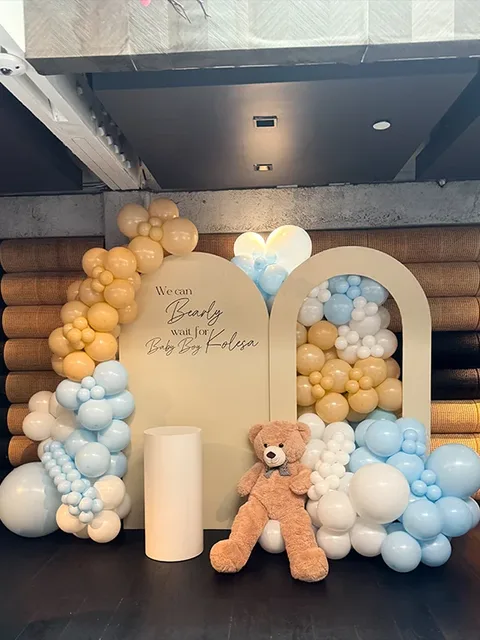
"How long will my garland last?" is the question I hear most often when clients are planning their installation timeline. Since balloon garlands are the most popular type of installation I build, this question deserves a thorough, garland-specific answer. While I've covered balloon decoration lifespan broadly, garlands have their own set of factors that determine how long they'll look their best.
Quick Answer: Balloon Garland Lifespan
| Condition | Expected Lifespan |
|---|---|
| Indoor, climate-controlled (AC, no direct sun) | 3-5 days |
| Indoor, warm or near windows | 1-3 days |
| Outdoor, shaded and mild temps | 12-24 hours |
| Outdoor, direct sun and heat | 6-12 hours |
| Outdoor, summer heat above 90F | 4-8 hours |
These timeframes assume professional-grade materials. Standard party-store balloons will last roughly half as long in every scenario.
Why Garlands Last Longer Than Helium Balloons
Balloon garlands are air-filled — not helium-filled. This is the single most important factor in their longevity. Helium escapes through latex pores within hours, which is why helium balloons sink by the next morning. Air-filled balloons don't have this problem. The air stays inside, and the balloon maintains its size and shape for days.
This is also why garlands are my go-to recommendation for clients who want maximum visual impact with maximum staying power. A garland installed on a Friday for a weekend celebration will still look great on Sunday.
What Affects Balloon Garland Lifespan
Temperature
Heat is the primary enemy of any balloon installation. When air inside a balloon heats up, it expands — pushing the latex closer to its breaking point. At temperatures above 90 degrees Fahrenheit, balloons begin to oxidize rapidly (that chalky, dull appearance) and can start popping. In Los Angeles, this is particularly relevant from June through October.
The ideal temperature range for a balloon garland is 65-78 degrees Fahrenheit. Indoor venues with air conditioning provide this naturally, which is why indoor garlands last so much longer.
Sunlight and UV Exposure
Direct sunlight does two things: it heats the balloon surface unevenly (dark colors absorb more heat) and UV rays chemically degrade the latex. Even a garland in a shaded outdoor area lasts significantly longer than one in direct sun. If your event is outdoors, I always look for covered patios, tent overhangs, or shaded walls for garland placement.
Humidity
Low humidity (common in LA's dry climate) can actually be slightly beneficial — balloons oxidize a bit slower in dry air. However, extreme dryness combined with high heat accelerates static and surface degradation. High humidity environments, like coastal venues, can cause balloons to become sticky and attract dust faster.
Latex Quality
Not all balloons are created equal. I exclusively use professional-grade latex from manufacturers like Qualatex and TUFTEX. These balloons are thicker, more consistent, and manufactured with better plasticizers that resist oxidation. The difference in longevity compared to dollar-store or generic balloons is dramatic — often 2-3 times longer. My balloon types guide covers material differences in more detail.
Inflation Consistency
Overinflated balloons pop sooner. Underinflated balloons look deflated before they actually lose air. I use sizing templates for every garland to ensure each balloon is inflated to the right diameter for its size category. This consistency is one of the reasons professional garlands outlast DIY attempts.
When to Install Your Garland: Timing Guide
Indoor Events
For indoor events in a climate-controlled space, my team can install a garland 1-2 days before the event with zero concerns. Morning-of installation for an evening event is ideal, but it's not necessary. If your venue gives you access the day before, that's perfectly fine for an air-filled garland.
Outdoor Events
For outdoor events — especially during LA summers — I recommend the latest possible installation time. My team typically arrives 2-3 hours before the event to build and install the garland. This minimizes sun and heat exposure before guests arrive and ensures the garland looks fresh and vibrant throughout the celebration.
For outdoor events, I also discuss realistic expectations with clients. A garland installed at 4 PM for a 5 PM event will look perfect through an evening party. But a garland installed at 8 AM for a noon outdoor event in July will show visible wear by the time guests arrive. Timing matters, and I plan accordingly.
How to Extend Your Garland's Life
- Keep it cool: Climate control is the best preservation tool available
- Avoid direct sunlight: Even near a window can accelerate oxidation
- No sharp surfaces: Rough walls, branches, or exposed hardware near the garland can cause popping
- Don't move it: Once installed, a garland is designed to stay in place — moving it risks structural damage and balloon loss
- Mist lightly: A very light mist of water can temporarily reduce static and surface oxidation on indoor garlands, though this is rarely necessary with professional-grade materials
Professional vs. DIY: The Lifespan Difference
I see DIY garlands regularly at venues where my team is installing other pieces. The difference is consistent: DIY garlands using standard party-store balloons begin showing visible oxidation within 12-24 hours indoors and often have significant popping and deflation by 48 hours. Professional garlands in the same conditions still look fresh at 72 hours and maintain structure through day five.
The reason isn't just material quality — it's also technique. Consistent sizing, proper strip attachment, balanced weight distribution, and secure mounting all contribute to a garland that holds its shape and stays intact longer. For more on the indoor vs outdoor decision, I've written a detailed comparison.
Planning a garland for an upcoming event? Share your venue details — indoor or outdoor, date, and time — and I'll recommend the ideal installation window to make sure your garland looks perfect from first guest to last photo.
Keep Reading
Frequently Asked Questions
How long does an air-filled balloon garland last indoors?
How long do balloon garlands last outdoors?
When should a balloon garland be installed before an event?
Do professional balloon garlands last longer than DIY?
Written by
Alina
I design and install custom balloon installations for events across Los Angeles. Every project is personal.
Check Availability →