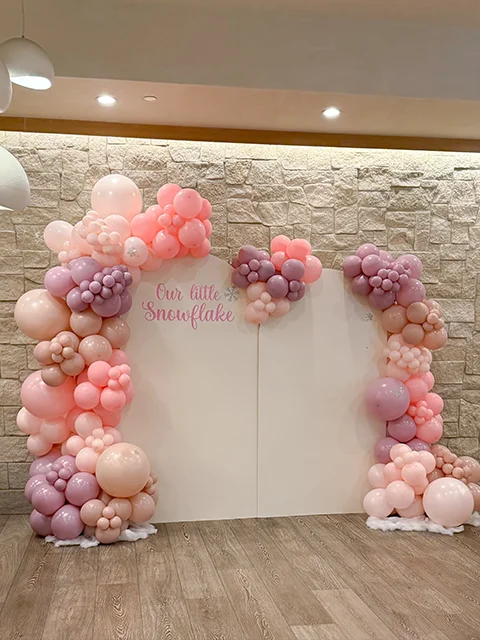
How to Transport a Balloon Arch (Pro Tips)
Professional balloon arches are built on-site, not transported. Here's why, plus practical tips for moving smaller DIY balloon pieces safely to your venue.

"How do I transport a balloon arch?" is a question I hear often — and the honest answer is: I don't. My team builds every arch on-site at the venue. Transporting a fully assembled balloon arch is impractical, risky, and almost always results in damage. That's exactly why professional decorators don't do it.
But if you're planning a DIY arch and need to move it, there are some approaches that work for smaller pieces. Here's the professional perspective on balloon arch logistics, plus practical transport tips.
Why Professional Arches Are Built On-Site
A standard balloon arch is 6–12 feet wide and 7–9 feet tall. That alone makes transport nearly impossible — it won't fit through most doorways, let alone inside a vehicle. But size is only part of the problem.
Fragility
Balloon arches are organic structures made of hundreds of latex balloons attached to a frame. Every balloon is precisely placed and sized. Even gentle contact — brushing against a door frame, shifting during a turn, pressing against a car seat — can pop balloons, shift the arrangement, and create visible gaps that ruin the design.
Wind and Movement
Moving a large balloon structure through open air — even from a house to a driveway — exposes it to wind. Balloons act like sails. A gust can twist the frame, tear balloons off the strip, or topple the entire installation. This risk multiplies significantly during transport on roads.
Temperature
Los Angeles summers regularly push car interiors past 140°F. Heat causes balloons to expand, become sticky, lose their color, and pop. Even with air conditioning running, the rear of a van or truck bed can be dramatically hotter than the cabin. My post on balloon decor delivery in Los Angeles covers how my team manages these logistics professionally.
Vehicle Limitations
Even a cargo van can't comfortably hold a 10-foot arch without compressing it. Compression means popped balloons, deformed shapes, and hours of repair work at the venue — if repair is even possible. The time spent repairing a transported arch often exceeds the time it takes to build one from scratch on-site.
How My Team Handles Arch Installation
My process eliminates transport risk entirely. Here's how it works:
- Materials arrive in bins. Balloons, pump, tools, and frame components travel flat and compact — no pre-assembled pieces.
- On-site inflation. My team inflates every balloon at the venue using electric pumps and a sizing template for consistent dimensions.
- On-site assembly. The arch is built in its final position, fitted to the exact space, and secured with appropriate bases or mounting hardware.
- Final styling. Small balloons, accent pieces, and any custom elements (signage, florals) are added last for a polished finish.
This process takes 1–3 hours depending on the arch size and complexity. It guarantees a perfect result every time — something transport simply can't promise. For the full experience, see my guide on DIY vs professional balloon installations.
DIY Transport Tips (For Smaller Pieces)
If you've built a smaller arch or garland section at home and need to move it, here are tips to minimize damage:
Keep Sections Short
Don't try to transport a full arch in one piece. Build in sections of 3–5 feet that can lay flat in a vehicle. You'll reconnect them at the venue. This is far more manageable and dramatically reduces breakage.
Use the Right Vehicle
An SUV with seats folded flat or a minivan works best. The key is a low ceiling — you want balloons resting gently on a flat surface, not hanging or compressed vertically. Avoid truck beds (wind and sun exposure).
Lay Flat on a Clean Sheet
Place a clean cotton sheet on the vehicle floor. Lay balloon sections flat, single layer, without stacking. The sheet prevents balloons from sticking to carpet or picking up debris that could cause pops.
Control the Temperature
Run the air conditioning and transport during cooler hours — early morning is ideal in LA. Never leave balloons in a parked car, even for a few minutes. If the venue setup window is in the afternoon, cool the car thoroughly before loading.
Drive Carefully
Avoid sudden stops, sharp turns, and rough roads. Balloons shift easily, and a hard brake can send sections sliding into door panels or seats, popping balloons along the edges.
When Pre-Built Transport Works
Transport is feasible in very specific situations:
- Small tabletop arches (under 3 feet) — these fit on a car seat and are sturdy enough to survive a short drive.
- Balloon bouquets and centerpieces — weighted foil balloon arrangements transport well in a box or bag.
- Short garland sections — 3–4 foot garland strips that will be attached to a wall or table at the venue.
For anything larger — a full arch, a 6+ foot garland, a backdrop — on-site construction is the only reliable option. If you're considering hiring a professional for your event, my balloon arch page shows the range of styles and sizes available, all built on-site with delivery and setup included.
Keep Reading
Frequently Asked Questions
Can you transport a fully assembled balloon arch in a car?
Do professional decorators transport pre-made arches?
How do I transport a DIY balloon garland to a venue?
What happens to balloons in a hot car?
Written by
Alina
I design and install custom balloon installations for events across Los Angeles. Every project is personal.
Check Availability →