Balloon Pump vs Helium — When to Use Each
Air pump or helium? Most professional balloon installations are air-filled — here's when I use each method, cost and lifespan comparisons, and why the answer surprises most clients.
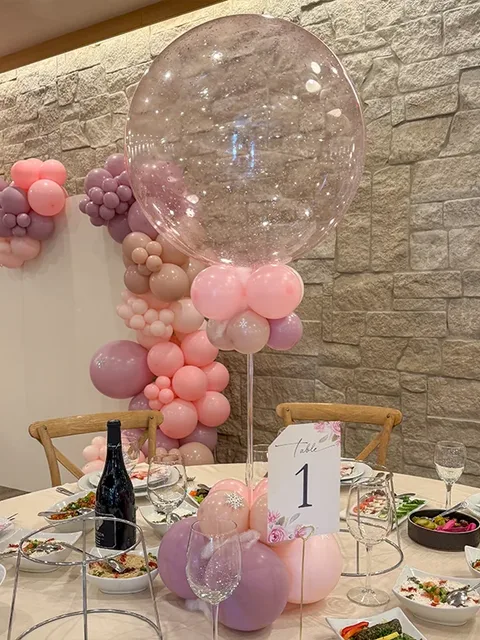
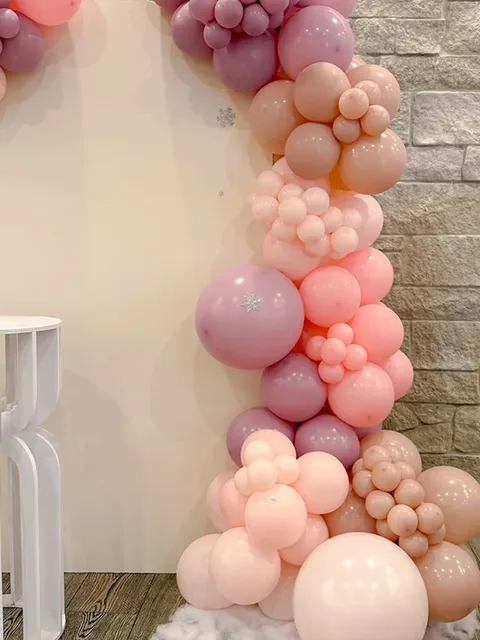
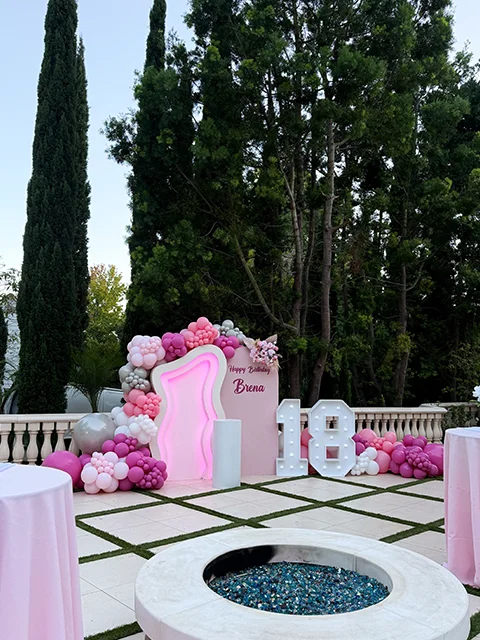
One of the biggest surprises for new clients: most of my balloon installations don't use helium at all. Those stunning garlands, arches, backdrops, and columns you see on Instagram? Almost all of them are inflated with air — using electric pumps and compressors — and attached to structural frames.
Helium has its place, but it's a specialized tool, not the default. Here's when I use each inflation method, and why it matters for your event.
Air-Filled Installations (The Majority of My Work)
Air is the standard inflation method for professional balloon decor. My team uses electric balloon pumps and commercial compressors to inflate balloons, which are then attached to frames, strips, or structures using professional techniques.
Air-filled installations include:
- Balloon garlands — attached to garland strip and mounted to walls, ceilings, or freestanding frames
- Balloon arches — built on custom metal or PVC frames
- Balloon backdrops — layered on backdrop stands or wall-mounted
- Balloon columns — stacked on vertical poles or freestanding bases
- Balloon walls — dense panel installations covering a flat surface
Air-filled balloons don't float — they stay exactly where my team places them. That's actually the point. It gives complete control over the design, and the balloons last significantly longer than helium.
Helium Installations (When Floating Is the Goal)
I use helium when the design specifically requires balloons to float. These installations create vertical drama and fill overhead space in ways air-filled designs can't.
Helium installations include:
- Ceiling clusters — groups of balloons floating at the ceiling with trailing ribbons
- Floating bouquets — weighted arrangements for centerpieces or accent points
- Balloon drops — balloons held in a net at the ceiling and released on cue
- Suspended garlands — helium-supported garlands that float without a frame
For a full guide on floating designs, see my post on floating balloon decorations and helium tips.
Cost Comparison: Air vs Helium
| Factor | Air (Pump) | Helium |
|---|---|---|
| Inflation cost per balloon | Essentially free | $1.50–$3.00 per balloon |
| Equipment | Electric pump ($20–$50 one-time) | Tank rental ($50–$80 per tank, fills 30–50 balloons) |
| Cost for 200-balloon installation | Pump cost only | $300–$500 in helium gas alone |
| Structural support needed | Yes — frames, strips, mounting | Minimal — balloons float on their own |
The cost difference is significant. For a large installation, helium gas alone can add hundreds of dollars. This is one reason professional installations are predominantly air-filled — it's not about cutting corners, it's about using the right tool for the design. Air gives better control, longer lifespan, and lower material cost. My balloon types guide covers materials in more detail.
Lifespan Comparison
| Balloon Type | Air-Filled Lifespan | Helium-Filled Lifespan |
|---|---|---|
| Standard latex (11") | 3–5 days indoors | 8–16 hours |
| Treated latex (Hi-Float) | N/A | 24–48 hours |
| Foil / Mylar | Weeks | 1–3 weeks |
| Bubble balloons | Weeks | 1–3 weeks |
This lifespan difference is why I can set up air-filled installations the day before an event with zero concern. Helium installations require same-day setup — and sometimes as close to event start as possible. For deeper detail on longevity, read my post on how long balloon decorations last.
Environmental Comparison
Helium is a finite, non-renewable natural resource. It's extracted from underground deposits and is critical for medical imaging (MRI machines), scientific research, and aerospace. While the balloon industry uses a small percentage of global helium supply, I'm conscious about minimizing waste.
Air is unlimited and free. By designing the vast majority of installations as air-filled, I reduce both cost and environmental impact without sacrificing quality or visual impact. When helium is the right choice for a design, I use it — but it's never the default.
What I Recommend for Your Event
For most events — birthdays, baby showers, weddings, corporate functions — the installations that make the biggest impact are air-filled. A lush garland, a dramatic arch, a full backdrop wall — these are all built with air and look just as stunning (often more so) than floating balloons.
Helium shines in specific scenarios: filling a large, tall ceiling space, creating floating centerpieces that don't need floor stands, or adding a balloon drop moment to a celebration. Many of my larger events combine both methods — air-filled structures as the foundation, with helium accents for added dimension.
Not sure which approach works for your event? Share your venue photos and vision, and I'll recommend the right mix. There's no extra charge for the consultation — it's part of every project.
Keep Reading
Frequently Asked Questions
Are most balloon decorations air-filled or helium-filled?
How much does helium cost compared to air?
Do air-filled balloons last longer than helium balloons?
Can I use a balloon pump instead of helium for an arch?
Is helium bad for the environment?
Written by
Alina
I design and install custom balloon installations for events across Los Angeles. Every project is personal.
Check Availability →